On February 4, 2026, arts leaders from throughout Delaware provided public comment at the Joint Finance Committee (JFC) in Legislative Hall, an opportunity for advocates to help influence funding priorities and emphasize the importance of investment in our sector. The meeting starts with a presentation from the Secretary of State, Charuni Patibanda-Sanchez.
What is the Joint Finance Committee? The JFC is responsible for writing the annual appropriations (operating budget) and grant-in-aid acts, consists of six members of the Senate Finance Committee and six members of the House Appropriations Committee, and will draft the final bills in May and June for introduction to the General Assembly.
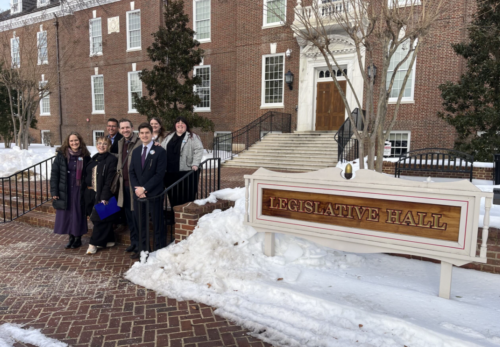
DAA participated in these public hearings in previous years, documented on our website from 2025, and 2024, This advocacy effort contributed to a total budget increase of $2.5M for the Delaware Division of the Arts (DDOA) over the last three years. This year, advocates thanked the General Assembly for these recent investments in the arts and asked for continued funding for the DDOA that builds upon this momentum.
Read the public comments below from those who participated in this year’s Joint Finance Committee Hearing:
Neil Kirschling, Executive Director of the Delaware Arts Alliance
“I am here to thank you for your recent investments in the arts and to advocate for continued funding through the Delaware Division of the Arts that builds on this momentum.
“Why do business want to come here? Why do young people like Nadia and Phy want to stay here? Let’s think about arts and culture as essential tools for Delaware’s quality of life and economy.”
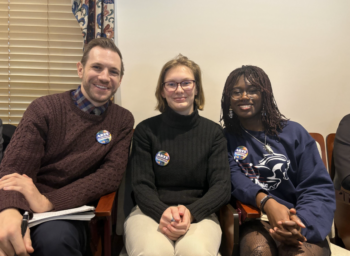
Nadia Nyannor and Phy Sullivan, High School State Thespian Officer
“Nadia: Within the public school system it’s become very apparent that a lot of extra opportunities for artists are impossible without private instruction, and the public instruction is not sufficient for people to qualify for extra opportunities.”
“Phy: I am so thankful for the arts and what they were able to give to me at my school. I want those same opportunities for my younger sister. Continue to support the arts so that my younger sister and everyone else’s future generations and kids will be able to continue all the skills that I got to learn and even get better.”
“Nadia: These experiences are imperative for exposure into professional arts so that students have a better understanding of what they are able to achieve if they continue with the arts.”
Darren Silvis, Freeman Arts Pavilion
“At a very volatile time for the arts on the national level, Delaware has the opportunity to sustain and grow its commitment to residents and visitors. The arts are essential to Delawareans. The arts break down barriers and bring people together, they increase the quality of life for all, support development in children and are an economic driver for our communities…
“We are creating jobs and keeping pace with increased presenting costs. We also have invested in more safety and security measures and equipment to have a venue where people feel safe to enjoy”
Read Darren’s full remarks here.
Cony Madariaga, DDOA Fellow & Teaching Artist at Delaware Institute for Arts Education (DiAE), Delaware Art Museum, and Mariposa Arts
“State investment in the arts has had a direct impact on my career and my community. Support from the Division of the Arts has allowed me to build a sustainable artistic practice and continue working as a teaching artist. Being in classrooms and community spaces matters deeply to me, especially when young people can see that the arts are a real and possible future.”
“In recent years, I was able to lead a Delaware Institute for the Arts in Education residency at my alma mater, A.I. High School, and experience firsthand how powerful it is for students to see someone who was once in their position working as a professional artist.”
Read Cony’s full remarks here.
Mary Jane Vanvestraut, Music School of Delaware
“Your investment doesn’t just support programs; it supports sustainable careers. Once the state funds the arts, you are strengthening, small businesses, stabilizing nonprofit employers, and ensuring that geography does not determine opportunity. You were helping us keep tuition accessible, offer financial assistance, and present free public concerts that bring families into downtown communities…”
“Public funding provides critical stability. It allows us to retain exceptional; educators serve all communities and contribute meaningfully to Delaware’s economy, cultural significance, and overall quality of life.”
Benjamin Wagner, DDOA Arts Fellow
“Funding the arts means investing in people—and in the shared vulnerability that allows communities to heal and move forward together. Now more than ever, it’s a vital investment.”
Read Benjamin’s full remarks here.
Help amplify our message:
Subscribe to our Newsletter to stay up to date with the next steps.
Register to attend the Arts & Culture Caucus
- March 19, “March for the Arts in Education”
- May 15
Register at https://bit.ly/ACC26rsvp
Joint Finance Committee Timeline
| Month | Action |
| February | Joint Finance Committee (JFC): Committee members consider the Governor’s recommended operating budget and hold hearings to discuss budget items with agencies and advocates. |
| February – March | The finance team meets with the Governor to draft budget reset. |
| March | Delaware Economic and Financial Advisory Council (DEFAC) with the Governor releases reset of the proposed operating, capital, and one-time bill. |
| March-April | Bond Bill Committee Hearings: Committee members consider the Governor’s recommended capital budget and hold hearings to discuss budget items with agencies and advocates. |
| May | Mark-up: JFC reviews budget proposals. |
| June | The General Assembly passes the budget and bond bills, and the Governor signs the bills by June 30.
The new fiscal year begins July 1 |