Delaware is showing the nation what it looks like to treat artists as professionals. OperaDelaware’s new salaried artist program provides singers with steady pay, health benefits, and housing support while also engaging them in community programs and organizational leadership. It’s a model that speaks directly to CREATE Plan Recommendation #7, which calls for fair pay guidelines to ensure artists and creative workers can build sustainable careers in Delaware.
Kerriann Otaño, Vice President of Engagement at OperaDelaware explained that many opera singers live gig to gig, often juggling side jobs to make ends meet.
“Traditionally in opera, opera singers are freelance artists… you live out of a suitcase for the majority of the year,” she said. “We started asking ourselves, what do we owe artists? And we think we owe them stability. We think we owe them a community.”
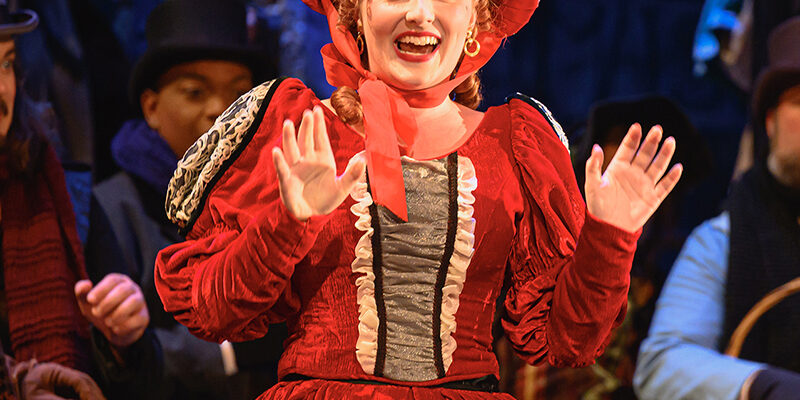
OperaDelaware’s company artist model does just that by offering full-time employment, a $50,000 salary, housing stipend, and health insurance benefits. For soprano Toni Marie Palmertree, one of OperaDelaware’s artists, the impact goes beyond the stage.
“At Opera Delaware, we are full-time employees. We are singing, we are creating programs, we are working in administration,” she said. “Having a W-2 allows you to get a loan from a bank, to buy a home, to put a child in daycare. That stability helps artists build lives in Delaware, which strengthens our communities and our economy.”
She continued, “My creative output this year has just, I’d say it’s even more than doubled, just because of the people that I’ve been around. And also I’m in a place where I can make real change and real difference.”
Palmertree added that stability transforms what artists can give back.
“When we go away on gigs, we have to pay our rent at home and then we’re also renting another place. So having some stability and a home base and a home community is essential for artists,” she said. “Health insurance, I wish this would go without saying, but it doesn’t matter how healthy you live, you’re going to need health insurance. I’m a cancer survivor, so it’s actually really essential that I have health insurance. And having that stability just gives me one less thing to worry about.”
For Neil Kirschling, Executive Director of the Delaware Arts Alliance, OperaDelaware’s program reflects the CREATE Plan in action.
“The work at OperaDelaware is exhibiting progress towards a few recommendations in the CREATE Plan, especially the one centered on paying artists and creatives fairly as professionals,” he said. “When you are paying artists as working professionals, you are putting money back into the economy and helping support them as workers.”
Kirschling emphasized that models like this can also help close equity gaps across gender, race, and job type. This approach is positioning Delaware as an example for opera companies across the country.
“For the first time in OPERA America’s history, they have selected Wilmington, Delaware, to be the location of their conference,” Otaño said. “I feel like a large part of the reason why is because of this company artist model, because the industry itself is searching for what is the next step.”
The question now is how to sustain and expand this model. OperaDelaware’s pilot is possible thanks to support from the Longwood Foundation and other donors, but long-term success will depend on continued investment and new partnerships.
“We now get to show the proof of what this has done for artists and our community over the course of two years, and use that as the bedrock for seeking future funding,” Otaño explained.
That challenge is not unique to OperaDelaware. Across Delaware’s creative sector, artists are searching for opportunities to build lasting careers.
“There are so many artists living here in Delaware, hip hop, rap, soul, the artists are here, but the employment opportunities are not,” Otaño said. “It certainly cannot just be one arts institution. It is going to have to be a concerted effort among all arts institutions to advocate for our artists, our technicians, our behind-the-scenes crew, our freelancers. This is just the start.”
One year after the CREATE Plan’s release, OperaDelaware’s salaried artist program shows that Delaware is moving beyond talk and building real change. If Delaware can build the infrastructure to support models like OperaDelaware’s, the state will not only retain its own creative talent but also attract artists from across the country. Sustainable careers mean stronger communities and a stronger economy, positioning Delaware as a place where the arts are not simply performed, but lived.