
Delaware is looking to the past to reimagine how public investment can support artists as workers in the future. At the Delaware Art Museum, this work is taking shape through Citizen Artist, a 2026 exhibition that will coincide with the nation’s semiquincentennial and celebrate the legacy of artist workers in America.
Beginning with Franklin D. Roosevelt’s New Deal programs of the 1930s and extending through the Comprehensive Employment and Training Act (CETA) of the 1970s, Citizen Artist explores a chapter in history when thousands of painters, photographers, writers, actors, and teachers were employed to serve their communities. Although CETA was not created to support the arts, local leaders adapted the program to place artists in schools, senior centers, and cultural institutions nationwide. In Delaware, that investment helped shape programming at the Delaware Art Museum and laid the groundwork for The Delaware Contemporary.
“Citizen Artist is a celebration of artists as workers across the 20th century,” said Margaret Winslow, Head Curator and Curator of Contemporary Art at the Delaware Art Museum. “We want to examine those past models of equity and access. How can we examine those and bring them forward into the creative environment today? How can we consider, today, the unique needs that we have in this moment, the unique needs that we have to cultivate, to support a thriving artistic economic landscape? How can we maybe find some inspiration from the past?”
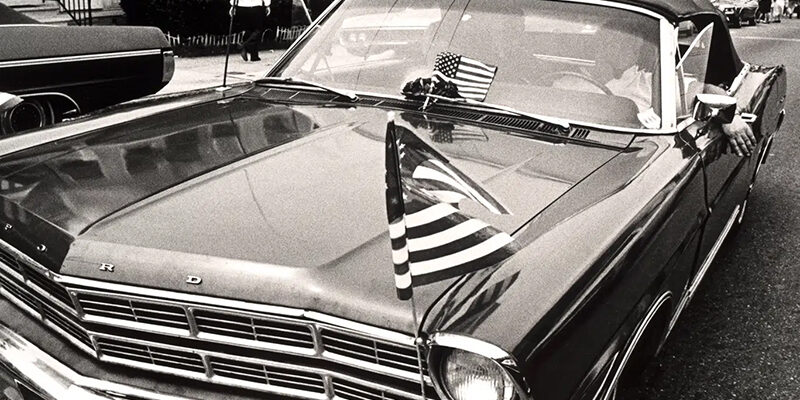
For artists who participated in CETA, the experience was transformative. Photographer Morris Brown II joined Delaware’s Metroscope project and documented bicentennial events across the state. “I got a chance to cover pretty much from the top of the state to the bottom of the state,” he recalled. “My job was to capture the moment so that if you weren’t there, the pictures would show you what you missed.”
Brown said the program gave him access and recognition that might not have been possible otherwise. “When you came through with a program like Metroscope, it got you through doors I would have had trouble getting through because of my skin color. In that sense, it was a benefit.”
He added that CETA also shifted how communities valued artists. “Most people have art around them all the time, but they don’t see it as someone’s job. Programs like CETA made people understand that the contributions artists make are real work, and that changed how communities valued us.”
Flash Rosenberg, another CETA artist, said the program gave her both stability and momentum. “It meant everything because it was an art job,” she explained. “The pay was very low, but you could live, and you could pay your rent. It gave me the confidence that I could have a life as an artist. That is not something you can put a price on or even legislate.”
The experience shaped her path as an educator, entrepreneur, and humorist. “It accelerated my ability to run my own business. It did not bifurcate an artist. It enabled us to see ourselves as full entities who mattered.”
For Winslow, stories like these remind us that public investment in creative labor has ripple effects across entire communities. “We believe that by examining the CETA history, we can remind ourselves that creative labor is applicable across so many different systems in a thriving community,” she said. “It’s applicable in the economic, social, educational, [and] political systems. All of that creative labor can be integrated into that work.”
The CREATE Plan provides a framework for translating those lessons into action today. In addition to fair pay guidelines and workforce development, it calls for including the creative economy in statewide economic development communications and programs (Recommendation #5) so that artists and creative businesses are part of how Delaware defines and promotes its economy.
Neil Kirschling, Executive Director of the Delaware Arts Alliance, underscored why this matters, noting, “CETA was a workforce development program that acknowledged we can put money towards artists as public service artists. That is a different way of thinking than we utilize now. It is exciting that the Delaware Art Museum is aligning its programming with the CREATE Plan and thinking about how to embody its recommendations through their own efforts and strategic plan.”
Looking ahead, Winslow sees Citizen Artist as both an exhibition and a call to action. “Our goal is to grow knowledge about federally supported arts programs, demonstrate the impact artists have had on thriving communities, and highlight pathways to employment and funding opportunities,” she said. “By connecting historic examples to today’s CREATE Plan recommendations, we can move from reflection to action.”
Rosenberg added that Delaware is especially well-positioned to lead by example. “I think Delaware is small enough to really be effective and be a model for the rest of the country for how things can happen,” she said. “Life can be made more enjoyable by the arts, and if we do not enjoy our lives, why have one? Cultivating a creative economy is how we ensure that joy is sustainable.”