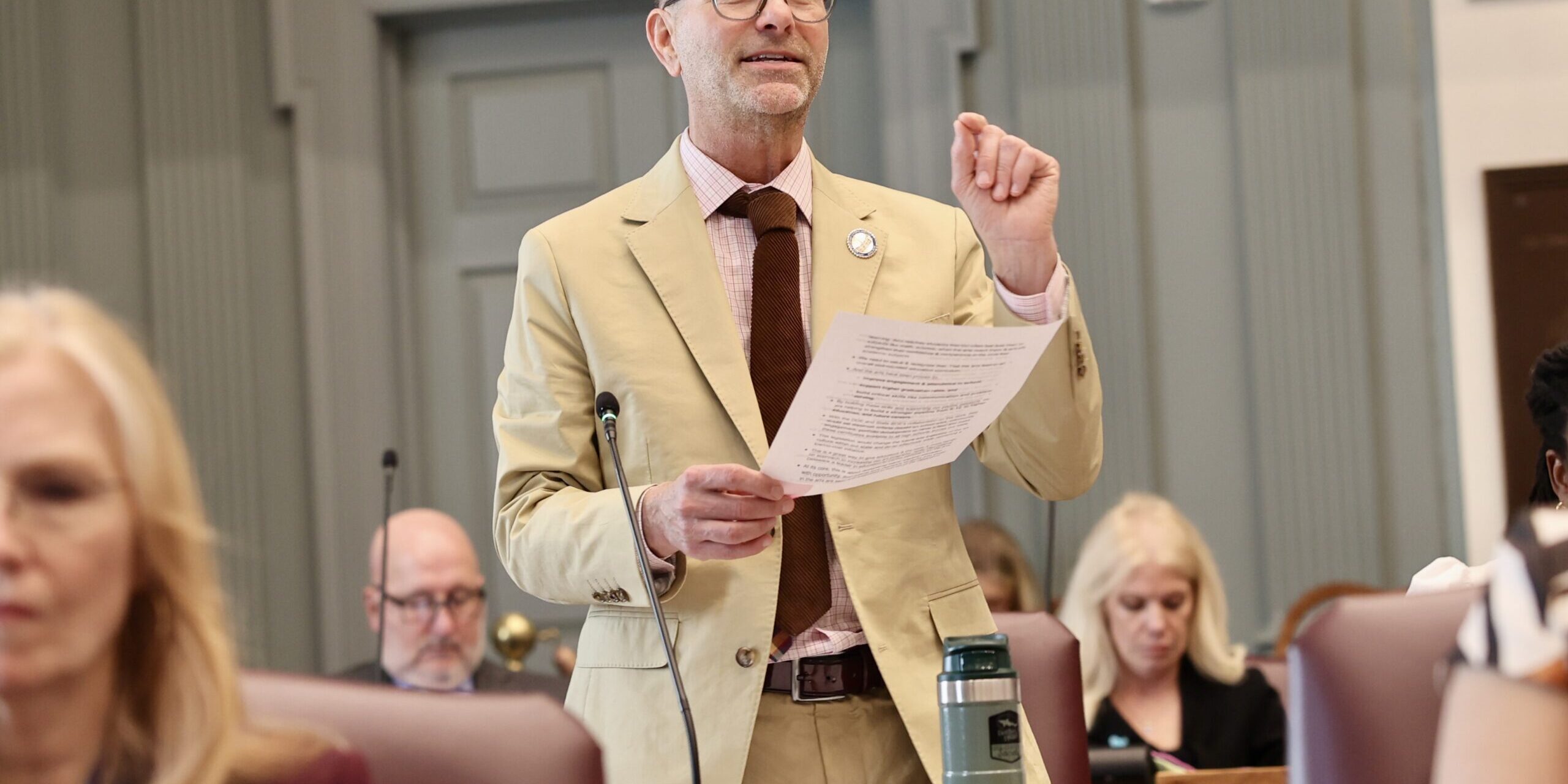
On March 17, 2026, Senator Dan Cruce (District 1; Primary Sponsor) and Representative Mara Gorman (District 23; Co-prime sponsor) introduced SB260, legislation to establish Delaware’s “Certificate of Arts Excellence” for high school students.
Senate Bill 260 would help formally recognize high school students’ sustained achievements in the arts, beginning in the 2027-2028 school year, thereby promoting arts education and supporting creative career pathways.
Bill Synopsis
“According to the Arts Education Partnership, 27 states currently include arts course credits as a requirement for high school graduation, and several states have implemented diploma seals or similar recognition programs to incentivize participation. This Act directs the Department of Education to establish the Delaware Certificate of Arts Excellence to recognize high school students who demonstrate sustained engagement and achievement in the arts. Establishing a similar program in Delaware could help increase arts enrollment, elevate the value of arts education, and support students interested in pursuing creative professions.”
Retrieved from the Delaware General Assembly website.
Key Takeaways
-
Recognition for student artists is growing across the nation.
Several states are now offering seals or certificates that acknowledge the talent of student artists. For example:
- Arizona: Seal of Arts Proficiency
- Florida: Seal of Fine Arts
- Georgia: Fine Arts Diploma Seal
- North Carolina: Arts Proficiency Endorsement
- Ohio: Fine Arts Seal
- Wisconsin: Working on the development of a seal.
-
The Certificate of Arts Excellence is a recommendation of Senate Concurrent Resolution 109 (SCR109).
SCR109 is legislation passed in 2025 to begin a process to evaluate and enhance education and workforce pathways supporting the creative economy. SCR109 is supported by recommendations in the CREATE Plan to elevate and cultivate young creatives. Further Reading:
-
The Delaware Certificate of Multiliteracy offers precedent for a certification program for high school students.
The certificate is awarded to students who have attained a high level of proficiency in one or more languages, in addition to English. The Certificate of Multiliteracy is Delaware’s version of the Seal of Biliteracy which has been established in 40 states and the District of Columbia to celebrate and promulgate the learning of languages as a crucial 21st century career and workplace skill. Both certification programs will be led by the Delaware Department of Education.
-
Delaware Stakeholders will be engaged in the development of the certification program.
The Certificate of Arts Excellence will be established by the Delaware Department of Education (DDOE). The bill includes minimum requirements such as “recognition of school or community involvement in the arts or culture, work-based learning experiences, portfolio development, and other measures of college and career readiness” and “must be available to a student studying dance, music, theater, media arts, or visual arts.” The specific certification requirements will be determined by the DDOE and will solicit input from stakeholders relevant to the effort, such as educators, students, administrators, and creative professionals.
-
SB260 is one step in the effort to strength Delaware’s next generation of creatives.
This legislation offers a low-cost, high-reward option to support student artists, but the work isn’t complete. DAA will continue to advocate for arts education, and policymakers have publicly testified that this is a first step. Both the CREATE Plan and SCR109 Report suggests additional ways to strengthen the connection between creative pathways and workforce development. Advocates will continue tracking and supporting arts-favorable legislation. Follow along on DAA’s Bill Tracker, linked here.
Advocacy for SB260
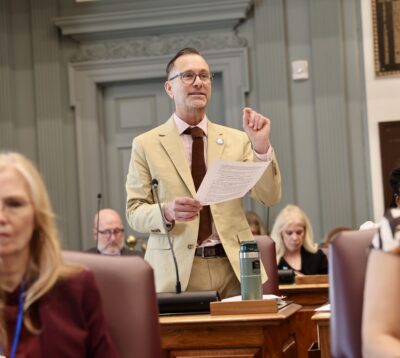
On March 19 during “March for the Arts”, the bill was unanimously passed and co-sponsored in the Senate. While on the Senate Chamber floor, Sen. Dan Cruce shared the following,
“Not all high schools have formal arts pathways, but all high schools have a variety of arts programs. [SB260] creates a state recognition for students that have dedicated time, coursework, and talents focused on the arts…
“All of our constituent organizations that we work with and that interact with our K-12 public education system have young learners who excel in the arts — from dance to music to visual performing arts – helping to bring culture into our states and their generation. They should be recognized for their dedication and passion and commitment to the arts.
“Arts education is not an extracurricular, but a foundational step to student success. So many students have different modalities of learning, and art reaches students that too often feel left out…
“The arts have been proven to improve engagement and attendance, higher graduation rates, critical skills like communication and problem-solving. By building these skills and supporting our youth passion, we’re hoping to build a stronger pipeline from K-12 to higher education and straight to careers.”
Watch Senator Cruce speak on the General Assembly Live Stream from 3/19/26.
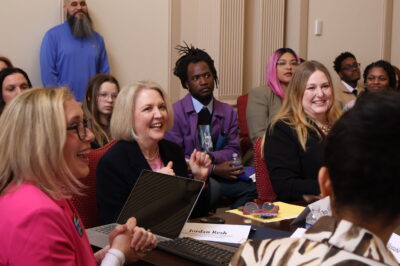
Earlier that day, Rep. Mara Gorman joined the Arts & Culture Caucus, sharing her support of SB260 as well:
“What SB260 does is encourage students who are already interested in taking arts classes to view it as not perhaps a waste of their time or be told by anyone that they’re not being recognized for the importance of the work that they want to be doing. They’ll get a distinction that complements their diploma and I’m just really excited that we’re going to offer this kind of recognition…
“It just elevates; it’s one more step in Delaware toward elevating the arts and showing that it’s a serious part of our communal life…
“There are local education agencies (LEAs) in Delaware that are already providing work-based learning continuum opportunities to students within those non-career and technical education creative pathways, and we are working to continue to support students to have greater access to those opportunities.”
Listen to Representative Gorman’s full remarks at the Arts & Culture Caucus recording from 3/19/26.
Additionally, while testifying on behalf of SB260, Sen. Cruce and Rep. Gorman shared the following quotes:
“At it’s core, this is about recognizing talent, aligning education with opportunity, and making sure Delaware students who excel in the arts are seen and supported in and out of the classroom” – Senator Dan Cruce
“While some Delaware schools offer strong arts programming, access to formal pathways is not consistent statewide. This certificate ensures that every student statewide can earn meaningful, statewide recognition for their work.” – Representative Mara Gorman
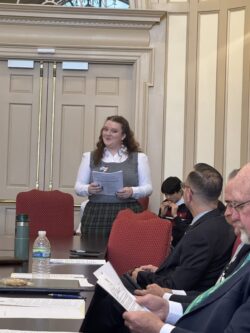
The day prior, 3/18, DAA’s Engagement and Operations Coordinator, Jordan Resh, went on record in support of the bill:
“These students are passionate about the role of the arts in their lives and careers, but there are opportunities to better communicate and recognize the creative talent that makes them exceptional students too. Support of these arts students will help bring legitimacy to their work and help retain the talented youth Delaware’s arts educators are helping foster.”
Read Jordan’s full testimony here.
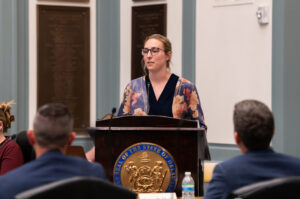
On 4/16, arts advocates attended the House Education Committee to testify again on behalf of the bill. The Biggs Museum’s Director of Learning & Engagement, Kate Huffman, shared in support of the bill:
“[As an arts educator and Capstone Coordinator], I often found myself reflecting on my own experience aspiring to an art career. The conversations around those ambitions were mostly limited and discouraging; always an expectation of having a “backup plan,”… as if art were something to pursue only after achieving financial stability elsewhere. By formally recognizing artistic achievement at the high school level, we create more equitable opportunities for students to pursue their passions with confidence and credibility.”
Read Kate’s full testimony here.
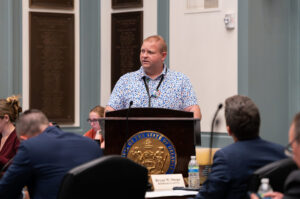
Direct of Band at Louis L. Redding Middle School and President-Elect for the Delaware Music Educators Association, Jeffrey Leager, also spoke in front of the House Education Committee on 4/16 in support of the bill:
“Elevating the value of Arts Education in our schools provides more than just performances on stages and venues. It helps shape the development of our students not only academically, but also positively impacts their social-emotional wellbeing. Elevating the value of Arts Education in our schools shapes, grows, and connects communities that then are able to foster generational support, economic growth, and stability. Elevating the value of Arts Education in our schools is a critical need at a time in history where the value of human effort, ingenuity, and creative processes should be more celebrated and nurtured rather than a keystroke or computer process.”
Read Jeff’s full testimony here.
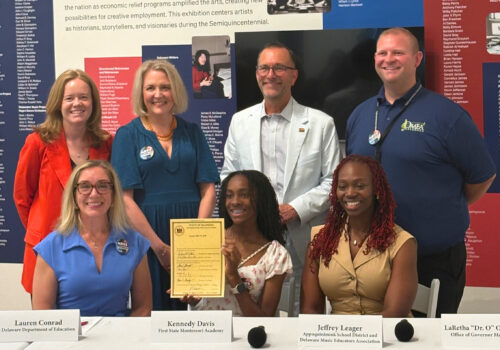
Ceremonial Bill Signing
On June 4, DAA participated in a Ceremonial Bill Signing to celebrate Senate Bill 260, enacting Delaware’s Certificate of Arts Excellence, alongside Delaware’s Lieutenant Governor Kyle Evans Gay, the bill’s primary sponsor, Senator Dan Cruce, and co-prime sponsor, Representative Mara Gorman.
The Certificate of Arts Excellence will honor high school students who have sustained achievements in the arts, beginning in the 2027-2028 school year, thereby promoting arts education and supporting creative career pathways.
The bill signing featured a panel, including advocates DAA helped to identify: Arts Educator at Appoquinimink School District and Delaware Music Educator Association Incoming President Jeffrey Leager and First State Montessori Academy Student and Pieces of a Dream, Inc. Dancer Kennedy Davis. The panel was also joined by Governor Meyer’s Senior Policy Advisor LaRetha “Dr. O” Odumosu and Delaware Department of Education’s Education Associate, Visual and Performing Arts Lauren Conrad. Thank you to all of the panelists for helping to articulate the value of this bill in recognizing Delaware’s exceptional arts students and the role talented arts educators play in fostering their skills!
Want to stay up to date?
- Follow DAA’s Bill Tracker for updates on legislation impacting the arts, including SB260.
- Subscribe to the Delaware Arts Alliance’s Newsletter and social media to receive updates on this initiative and others impacting the arts and culture sector, linked here.