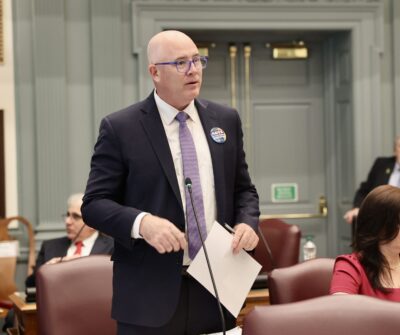
New legislation from Senator Russ Huxtable requesting the Delaware Division of the Arts (DDOA) to report recommendations for a potential Delaware Arts and Entertainment/Cultural District Program.
What is a Cultural District?
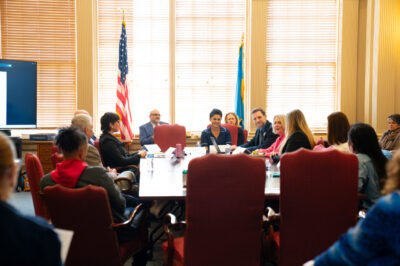
View a recording of a presentation delivered by Martin Cohen of the Cultural Planning Group at the May 14, 2026, Arts & Culture Caucus at Legislative Hall in Dover (linked below). Access the meeting slides here.
Cultural districts are special geographically defined areas, designated or certified by state governments, that utilize cultural resources to encourage economic development and cultivate synergies between the arts and other businesses.
The composition of cultural districts as a policy mechanism varies among states. The Delaware Arts Alliance is working with policymakers and stakeholders to determine how a bill of this type may best support Delaware’s creative economy, including Senate Concurrent Resolution 167, introduced by Senator Huxtable.
Read more below about how Arts & Entertainment/Cultural Districts connect to the CREATE Plan, where it exists in other states, and how you can help support its advocacy efforts.
Definitions
- Arts & Culture Districts: State cultural districts are special areas, designated or certified by state governments, that utilize cultural resources to encourage economic development and cultivate synergies between the arts and other businesses. (NASAA Definition)
- Place-Based: Geographically defined — a neighborhood corridor, or district anchored in community identity.
- State-Recognized: Formal designation or certification through a state program, conferring legitimacy and visibility
- Arts-Anchored: Concentration of cultural organizations, creative businesses, artists, venues, and events
- Cultural Districts Framework: A well-defined geographic place with a concentration of arts, cultural and creative economy assets — artists, nonprofits, venues, creative businesses, activities, events and cultural identity (CPG – Oregon Cultural Districts Framework, 2023)
Alignment to the CREATE Plan
The CREATE Plan (Creative Economy and Tourism Expansion Plan), released by DAA in 2024, includes several strategies to strengthen Delaware’s creative economy. With input from 600+ stakeholders throughout Delaware, several policy recommendations were produced that would benefit from a creative districts program, such as those focused on the connection between the arts and the economy, tourism, and expanding its footprint. Specific recommendations include:
- Recommendation #5: Include the creative economy in statewide business and economic development communications and programs.
- Recommendation #11: Emphasize arts and culture in Delaware’s tourism communications.
- Recommendation #12: Identify additional revenue streams to support Delaware’s creative economy.
- Recommendation #21: Identify and promote spaces for the creative economy.
Nationally, cultural districts tend to become destinations for both locals and visitors, and as such contribute to economic influx and revitalization. Cultural districts are also a tool to assist with the retention of homegrown assets and uses, including artists and arts organizations, as well as other culturally and ethnically diverse facilities and uses, and small businesses.
What Exists in Other States
- California Arts Council commissioned a report in 2016 to inform the design of its cultural district designation program: California Cultural Districts. This program has helped to celebrate the breadth and diversity of California’s extensive cultural assets.
- Oregon Arts Commission commissioned a plan to start their Creative and Cultural Districts Program in 2023. A state-designated Cultural Districts program would enable the Arts Commission, the Cultural Trust and its Cultural Partners, and Business Oregon to support communities in achieving their economic, community development and tourism goals. A state-designated program could provide technical assistance, marketing, and grants to support communities in this work.
- Salt Lake Arts District, now known as “The BLOCKS” was a plan done in 2016 and has facilitated the area’s unique community and goals to aid collective growth and development.
Additionally, at least 17 states and several cities have established formal arts, culture and/or creative district support programs and have seen numerous benefits, including:
- Serving as an important economic and business development tool supporting the growth of both the creative sector and the overall economy.
- Improving a city’s ability to attract and keep investment in its community and promoting jobs creation and expanded career pathways in the creative economy.
- Increasing tourism and attracting visitors.
- Celebrating and preserving culture and heritage for diverse communities.
- Advancing cultural equity in the community and fostering equitable development.
- Attracting artists, start-ups, entrepreneurs, and other creative businesses into a central, geographically recognized, and jointly promoted area.
- Supporting redevelopment of historic assets and community revitalization.
- Supporting and complementing other business districts, whether contiguous or as an overlay (e.g., Main Street Districts, redevelopment areas, Opportunity Zones).
- Fostering a range of community, business, public and private partnerships.
In nearly all states, this sort of program is managed by the state arts agency. State programs vary in their formal partnerships with other state agencies and organizations including economic development agencies, arts businesses, chambers of commerce, main street organizations, historical societies, philanthropy, local government, tourism, transportation.
Remarks
Since May 14, legislators and advocates have spoken publicly in support of this programming.
Representative Mara Gorman, Co-Prime Sponsor
“[SCR167] helps to attract artists and cultural entrepreneurs into communities… Encouraging business and job development, creating hubs of activities and things for consumers to do, see and buy, and creating a tourism destination that fosters local cultural development.”
Senator Russ Huxtable, Prime Sponsor & DAA Executive Director, Neil Kirschling
What’s Next?
On May 14, Martin Cohen of the Cultural Planning Group presented during the Arts & Culture Caucus information on a creative districts program in Delaware. View a copy of these slides and recording of the presentation here.
DAA will continue to support legislation related to arts, culture, and creative district programs. Follow DAA’s Bill Tracker for updates on creative economy legislation, including SCR167.
For additional updates, be sure to subscribe to the Delaware Arts Alliance’s Newsletter and social media to receive updates, linked here.