
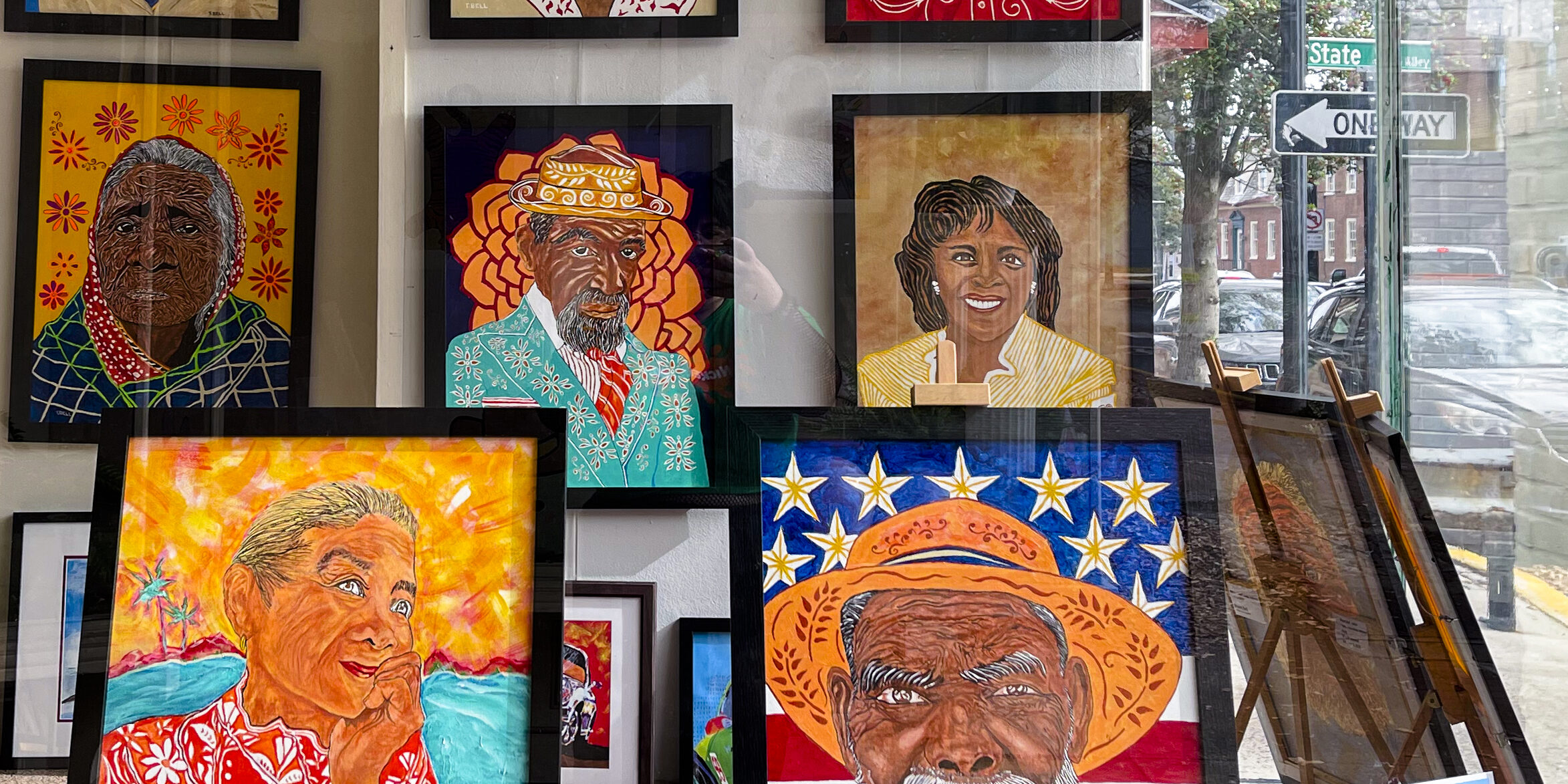
Across Delaware, arts and culture have taken root across downtown corridors and local neighborhood spaces. These vibrant areas exist because local creators built them from the ground up. What many lack is formal recognition and the policy framework required to sustain long-term growth.
A state-level cultural district program could provide that structural backing. Nineteen states have established formal programs of this kind, creating a national network of more than 400 state-designated districts.
Delaware is moving toward joining them. The General Assembly recently passed Senate Concurrent Resolution 167 (SCR167), sponsored by Senator Russ Huxtable, directing the Delaware Division of the Arts and the Division of Small Business to study how to build a statewide arts, cultural, and creative district program.
The CREATE Plan outlines what this framework can achieve. It calls for integrating the creative economy into state business initiatives, elevating arts in tourism marketing, securing new funding channels, and promoting spaces for creative work. A unified cultural district program could serve as a single vehicle to advance those goals simultaneously.
“Creative districts are a policy solution that would really address numerous recommendations in the CREATE Plan,” said Neil Kirschling, executive director of the Delaware Arts Alliance. “These are a policy mechanism that can drive additional revenue to the arts, that can ensure the arts are in traditional business and economic development programs. They are a way to drive tourism and also a way to support and pay local artists.”
“Delaware has made real progress this year,” he said. “A resolution was passed, co-sponsored by Senator Russ Huxtable and Representative Mara Gorman — Senate Concurrent Resolution 167 — that requests a report from the state’s Division of the Arts and the Division of Small Business recommending what a program could look like in Delaware, based on the other states that have implemented these cultural district programs.”
Randi Meredith has seen the case for formal recognition from two angles: as a public artist, and as a former Milton Vice Mayor who sat through the meetings where art usually didn’t make the agenda at all.
“A lot of the conversations that I had in local government were not about art. It was almost never considered,” she said. “But if someone comes in with an art project, it almost is cast as being frivolous. Which is unfortunate because everywhere you look that is art.”
Part of that disconnect stems from a lack of familiar framework around community spaces and gathering places.
“[Third places] was something that I had brought up in council meetings, and no one really knew what it was. But it’s home and work. And then the third place — where you go to hang out. A lot of that does not get included in the conversation,” Meredith said.
Where investment in arts and culture does happen, the economic results speak for themselves.
“In Milton, I’ve seen public art and the arts in general affect the economy. We now have the revitalized Milton Theater,” she said. “It has made it so that it’s possible for a town of 3,000 people to have multiple thriving restaurants and businesses. And we have the Dogfish Head Brewery in town. All of these things are within walking distance of each other, and that draws an international crowd.”
Yet Milton built that momentum without formal state recognition or guidelines. For Meredith, a statewide program would offer a clear roadmap for towns looking to replicate that success.
“I know that if we had a cultural district and there was sort of like a guideline for what that entailed, I could definitely come up with some ideas for how to take advantage of that, or how to get those ideas to other places that were designated that way,” she said. “That seems like a really exciting opportunity.”
At the Dover Art League, Gallery Manager Chelsea Memmolo knows what it takes to fill a void in the community.
“When I started at the Art League, it was dead. We weren’t open. It was not functioning. And there wasn’t a space for people, artists, to sell their artwork,” she said. “There is a void there in our community, and I could feel it myself too. They just wanted a place to come, feel seen and heard and be able to create with no judgment. And that didn’t exist before we reopened.”
While the Dover Art League successfully brought community programming back to life, operating without formal district backing limits its growth.
“Without a formal cultural district, we’re missing out on support in the form of funding, partnerships, partnering with the local businesses and creating a tight community where we can have events and things like that,” she said.
Memmolo points to local foot traffic and historic events as immediate opportunities that dedicated state support could help restore.
“We have a theater around the corner that, if there were actively shows happening, there would be more foot traffic. If we had gallery openings or just more monthly events,” she said. “We used to do First Fridays down here, and as soon as we reopened, they were gone. I do go to the Art Loop in Wilmington. You don’t just look at art, you experience all of the things that the community has to offer.”
She envisions a downtown environment defined by creative activity, local dining, and family-friendly experiences.
“I would want Dover to be known for having things to do that are fun, exciting, not based on alcohol,” she said. “We have bars, but where’s the good food, the good cultural experiences, shopping. I would just like people to feel safe coming down here as well.”
“The beauty of creative districts is that they can look different from neighborhood to neighborhood or community to community,” Kirschling said. “But at the heart of it, this is about local cultural development, and using the assets that are in our geographic areas to define what it is we care for. Every creative district could look different, and would look different, because the artists and the arts organizations and the cultural assets in that community vary.”
“Creative districts in other states, as they are developed, really create a forcing mechanism for conversations about what does our community need and how can the arts be a tool to address those things,” he said. “So if your area is thinking about public safety, how can our creative district support safer, healthier communities? If we’re thinking about substance abuse, education, or workforce development — all of these challenges can be addressed through the work of artists and arts organizations.”
SCR167 does not establish a program on its own. Instead, it directs the Division of the Arts and the Division of Small Business to jointly study how a program should be designed for Delaware. Programs in peer states suggest that direct funding, paired with flexible criteria that serve small towns and larger cities alike, can help a program succeed. Sustainable policy must also protect local artists from being priced out of the neighborhoods they helped revitalize.
“We can’t have a thriving downtown without a space to create and connect with others in a low stakes, no judgment environment,” Memmolo said. “We need to be able to feel safe connecting to others in a warm and friendly environment, surrounded by color and creativity.”